
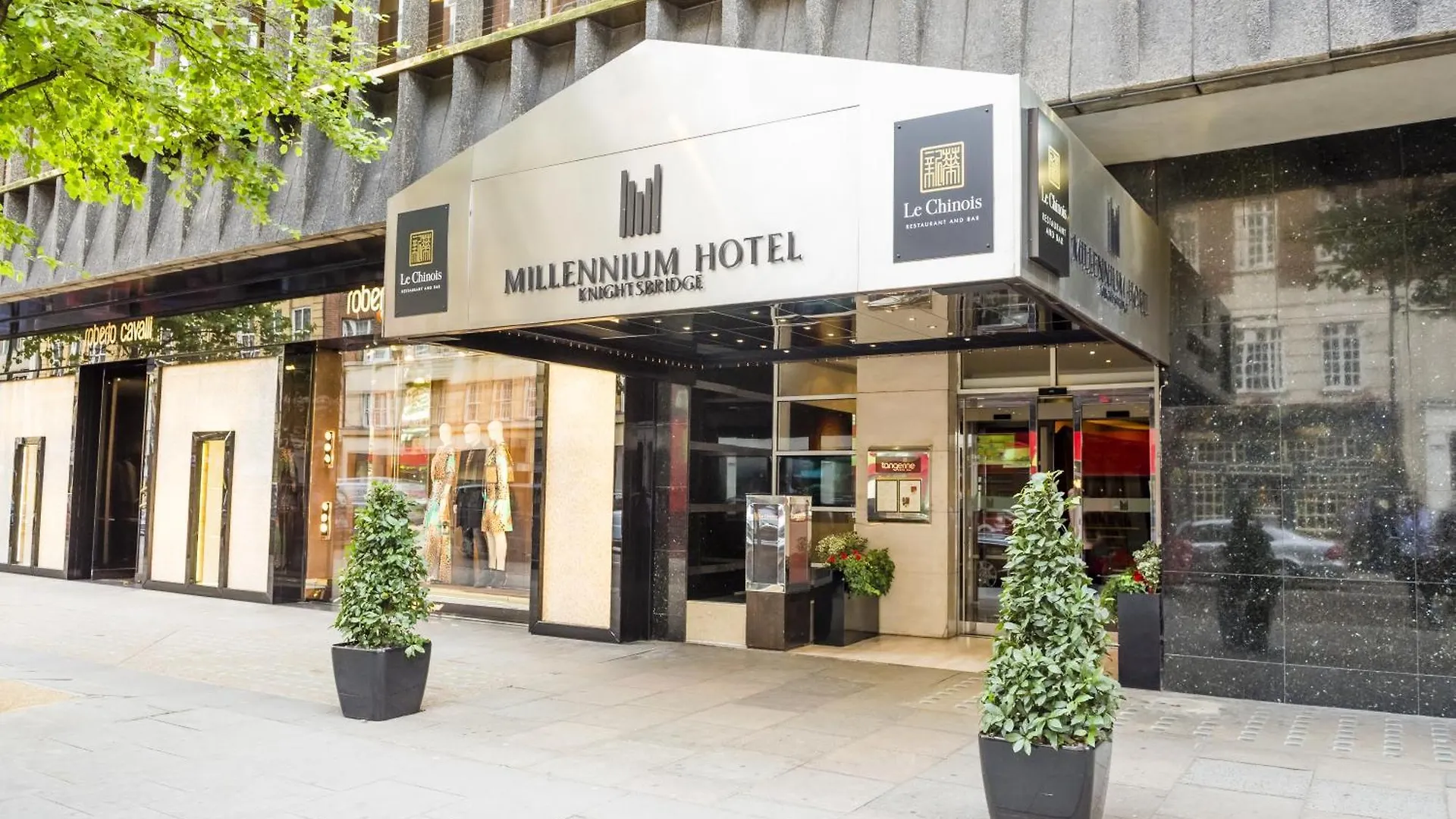
Kensington and Chelsea is home to two Millennium Hotels occupying very different micro-locations - one steps from Harrods on Sloane Street, the other beside Gloucester Road Tube. This guide breaks down what each property actually delivers, how they compare on room category and facilities, and which makes more logistical sense depending on your itinerary.
What It's Like Staying In Kensington and Chelsea
Kensington and Chelsea sits in West London, roughly 3 miles from the City, and operates at a noticeably slower pace than zones like Soho or the South Bank. The district is well-served by the District, Piccadilly, and Circle lines, with stations at Gloucester Road, South Kensington, and Knightsbridge giving access to central London in under 15 minutes. The area's Museum Mile - running between the Natural History Museum, the V&A, and the Science Museum - draws high foot traffic on weekends, but weekday mornings remain genuinely calm. Harrods and the designer boutiques along Brompton Road make Knightsbridge one of the most congested retail strips in London on Saturdays, so guests who prioritise quiet evenings are better positioned in the Gloucester Road end of the borough.
Pros:
- * Three Underground lines connect the district to Heathrow, the West End, and the City without requiring changes
- * The concentration of major museums within walking distance is unmatched - no other London borough has 4 national museums within 10 minutes on foot
- * After 9pm the streets are significantly quieter than in Covent Garden or Oxford Street, making it a practical base for light sleepers
Cons:
- * Hotel rates in Kensington and Chelsea run around 30% higher than comparable 4-star options in zones like Bloomsbury or Victoria
- * Chelsea proper (King's Road side) has limited Tube access - bus or taxi is often the only realistic option for the last mile
- * The residential character means fewer late-night dining options compared to Soho or Fitzrovia
Why Choose Millennium Hotels In Kensington and Chelsea
Millennium Hotels occupy a mid-to-upper 4-star bracket in this borough, sitting above budget chains but below boutique luxury properties. In Kensington and Chelsea, that positioning matters: the brand's two properties offer standardised room quality - Hypnos beds, marble bathrooms in upper-tier rooms, satellite TV, and in-room safes - in locations where independent hotels of the same calibre typically charge a noticeable premium. Room sizes at Millennium's Gloucester property lean larger than the London average for 4-star hotels, with Deluxe and Executive categories including proper seating areas rather than just a chair by the desk. The trade-off across both properties is that the lobbies and corridors reflect a corporate aesthetic more than the boutique character some guests seek in this residential borough.
Pros:
- * Both properties offer on-site dining with distinct concepts - modern Chinese at Knightsbridge, award-winning Korean Grill and an all-day brasserie at Gloucester - reducing reliance on restaurant reservations
- * Consistent room standards across both hotels: Hypnos beds, air conditioning, and in-room safes are available even in entry-level categories
- * The Gloucester property includes around 611 rooms with accessible parking and a fitness centre - facilities that independent boutique hotels in the area rarely match
Cons:
- * Neither property has a swimming pool, which guests paying Kensington rates often expect
- * The corporate conference focus at Gloucester means the lobby and public areas can feel busy during weekday events
- * Rooms in standard categories do not have the bespoke character or unique design that many boutique hotels in South Kensington offer at comparable price points
Practical Booking & Area Strategy
For museum-focused visits, positioning along Gloucester Road or Cromwell Road gives walkable access to the Natural History Museum, the V&A, and the Science Museum - all within 10 minutes on foot. Guests primarily targeting Harrods, Harvey Nichols, or the Knightsbridge designer strip are better served by a hotel on Sloane Street, cutting the transit gap entirely. Both Millennium properties sit within the Oyster card Zone 1, meaning any Central line, District line, or Piccadilly line journey is covered by a single flat fare. Book at least 6 weeks ahead for travel in July and August, when Kensington and Chelsea fills with visitors attending Royal Albert Hall summer programmes and South Kensington's museum blockbusters. The Proms season at the Royal Albert Hall (mid-July to mid-September) drives notable demand spikes for the entire SW7 postcode, where the Gloucester property sits. Hyde Park is under 10 minutes on foot from either hotel, providing a low-cost alternative to paying for gym access or a structured morning activity.
Recommended Millennium Hotels in Kensington and Chelsea
Both hotels reviewed below are operated under the Millennium Hotels brand and are located within Kensington and Chelsea. They differ significantly in scale, dining offer, and micro-location - which directly affects their suitability depending on your itinerary.
-
1. Millennium Hotel London Knightsbridge
Show on map


 Check-infrom 15:00 until 23:59Check-outfrom 06:00 until 12:00
Just a few rooms left at the best rate!
from£ 118
-
2. Millennium Hotel And Conference Centre Gloucester London
Show on map


 Check-infrom 15:00 until 23:59Check-outuntil 12:00
Hurry – almost gone at this price!
from£ 215
Smart Travel & Timing Advice for Kensington and Chelsea
June through September is peak season for Kensington and Chelsea, driven by international museum visitors, the BBC Proms at the Royal Albert Hall, and summer foot traffic through Hyde Park - hotel availability tightens fast from late May, and booking 6 weeks ahead is a reliable minimum. October brings a second, shorter demand spike as half-term school holidays fill the Natural History Museum and Science Museum to capacity on weekdays. January and February offer the lowest hotel rates in the borough - often around 25% below summer pricing - with all museums open and none of the outdoor crowd pressure. For both Millennium properties, midweek stays consistently yield better room availability and occasionally lower rates than weekend bookings, since the Gloucester property's conference function generates weekday corporate demand that can fill the hotel differently than leisure traffic. A stay of 3 nights is generally the minimum that makes Kensington a rational base: the Museum Mile alone justifies 2 full days, and Hyde Park, Kensington Palace, and the Royal Albert Hall add meaningful half-day options without leaving the borough. Late September and early October combine quieter streets, still-reasonable weather, and post-summer pricing - the most balanced window for first-time visitors who want value without sacrificing access.

